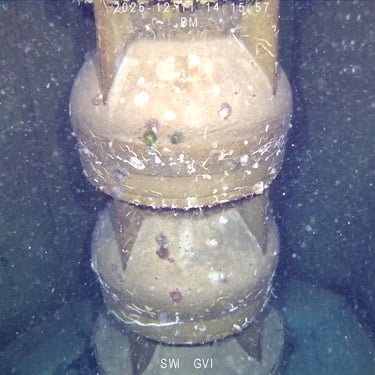
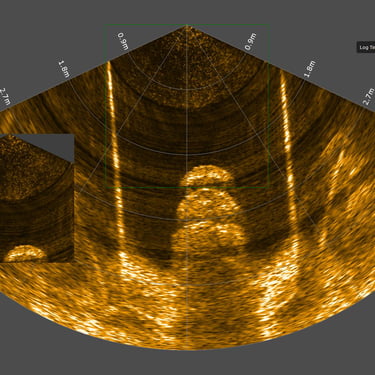
LNG Terminal Seawater Intake System Baseline Condition Assessment
Interested in how our expertise can benefit your project? Let's discuss how we can support your next challenge!
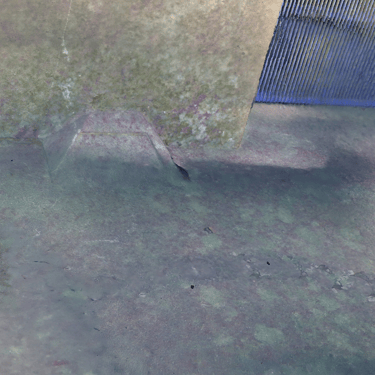
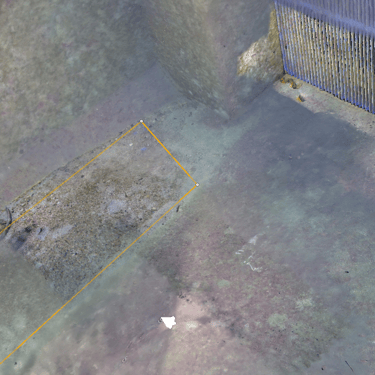
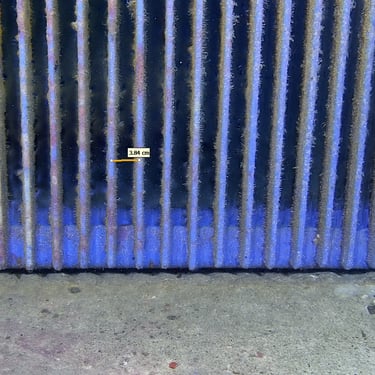
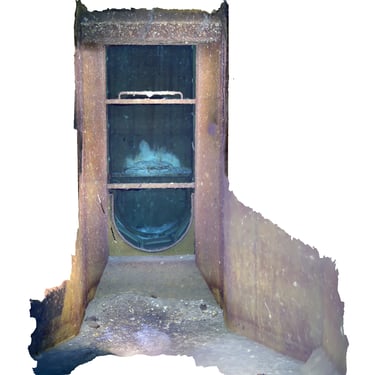
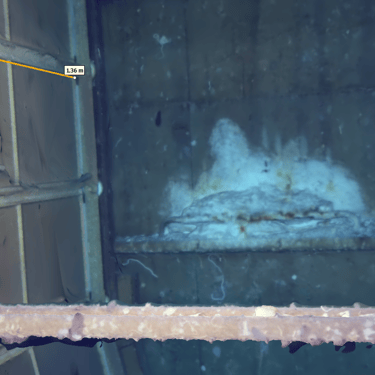
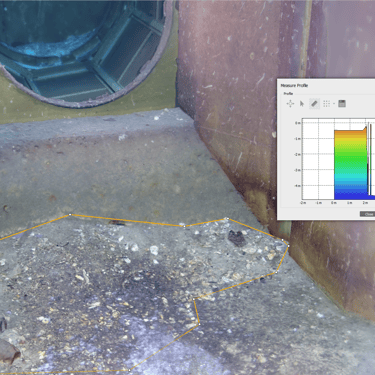
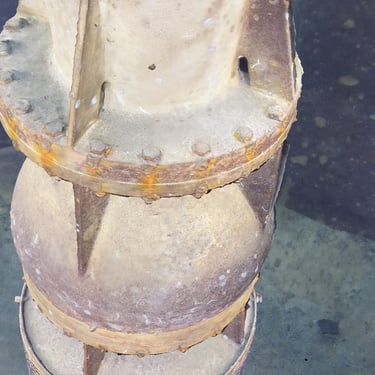
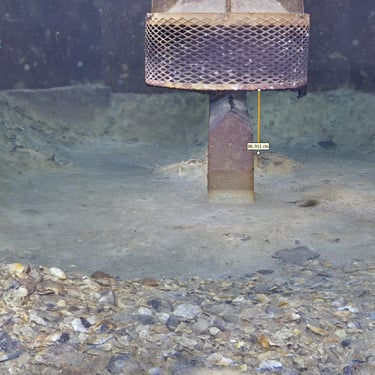
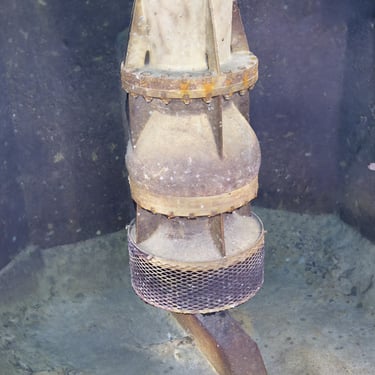
3D Photogrammetric Models of Critical Seawater Intake Assets
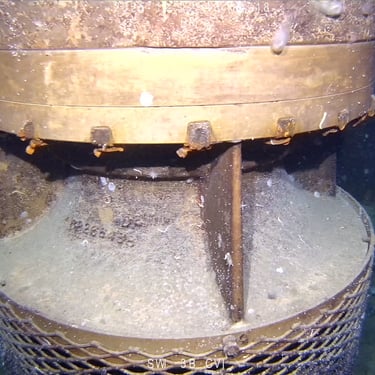
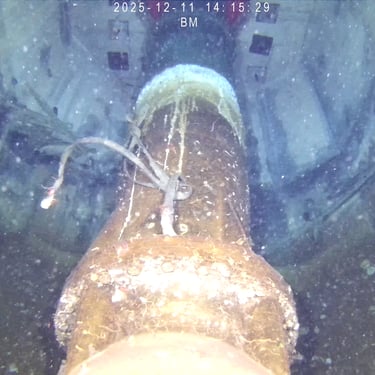
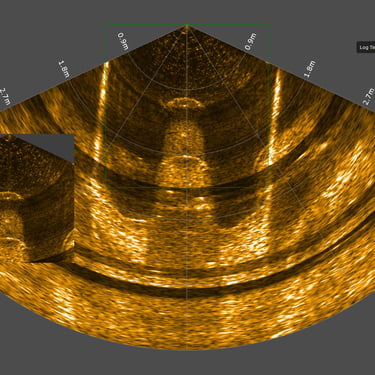
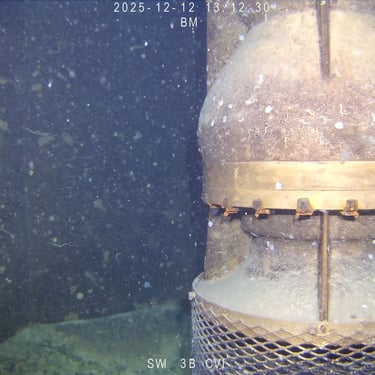
4K Video - Multibeam Imaging Sonar - Laser Measurements for Detailed Assessment of Seawater Intake System Civil&Hydraulic Components
Why this inspection was critical
Large LNG terminals rely on uninterrupted and hydraulically efficient seawater intake systems to sustain vaporisation operations. Despite their critical role, these systems often remain under-inspected due to confined access, continuous operation, and challenging underwater conditions.
In this project, BM was commissioned to establish a defensible, inspection-based baseline condition assessment of a major LNG terminal seawater intake system, enabling informed operational and maintenance decisions across the full hydraulic path.
Asset Overview & Inspection Challenge
The seawater intake system comprised twelve (12) flooded chambers arranged in three parallel intake lines, extending from raw seawater entry and coarse screening, through primary filtration, and into pump suction chambers feeding the vaporisation system.
The inspection was executed within a live industrial environment, under conditions of:
Restricted access and confined flooded spaces
Low visibility and complex internal geometry
Continuous terminal operation with minimal tolerance for disruption
These constraints ruled out conventional inspection approaches and required a purpose-built methodology combining compact subsea robotics with advanced sensor integration.
Inspection Objectives
The inspection aimed to:
Establish a reliable baseline condition across all intake lines
Assess structural condition, filtration performance, and hydraulic interfaces
Identify mechanisms affecting hydraulic efficiency, reliability, and long-term operability
Generate measurable, repeatable evidence suitable for future comparative inspections
Inspection Methodology
BM developed a zone-based inspection methodology, tailored specifically for large-scale seawater intake infrastructure with confined flooded chambers.
The system was inspected sequentially across three defined zones:
Intake and coarse screening chambers
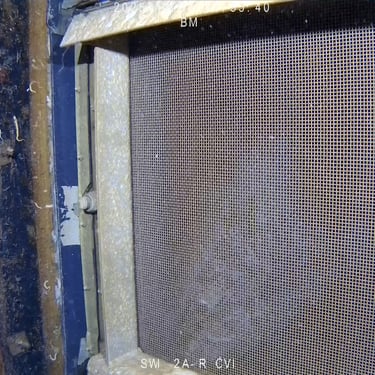
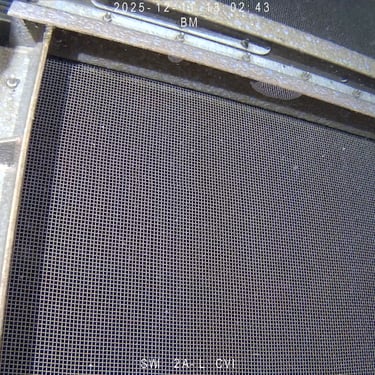
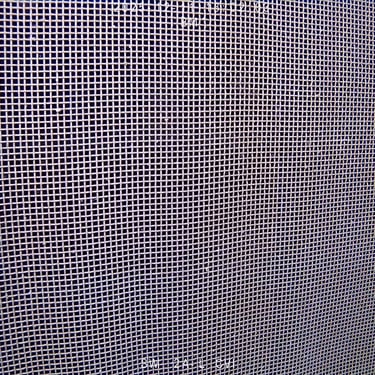
Travelling Band Screen (Beaudray TBS) filtration chambers
Pump suction chambers
This approach ensured systematic coverage of the complete hydraulic flow path, while maintaining operational safety and repeatability across all twelve chambers.
Technologies & Sensor Integration
To meet the geometric and access constraints of the system, a compact inspection-class ROV platform (Chasing M2 Pro Max) was selected, capable of safe deployment through narrow hatches while carrying an advanced sensor payload.
The inspection combined complementary data sources:
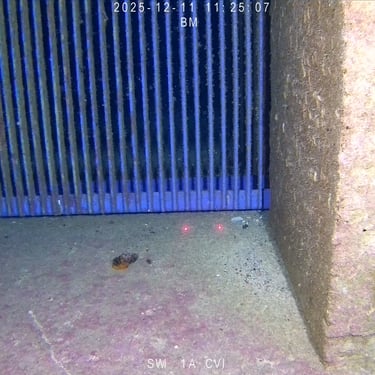
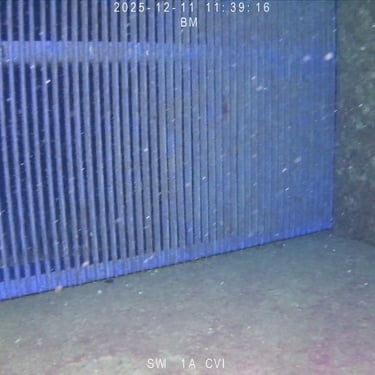
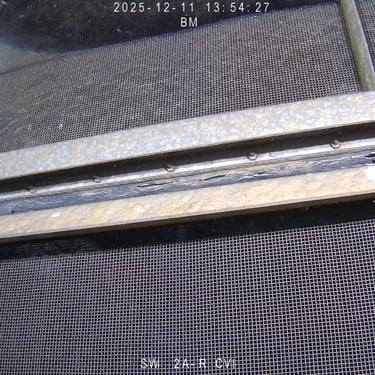
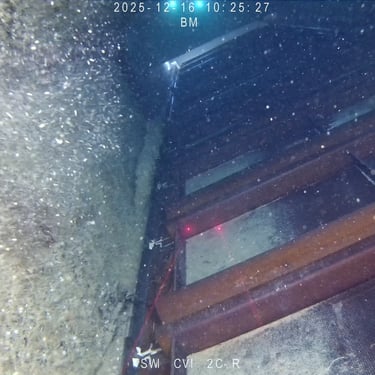
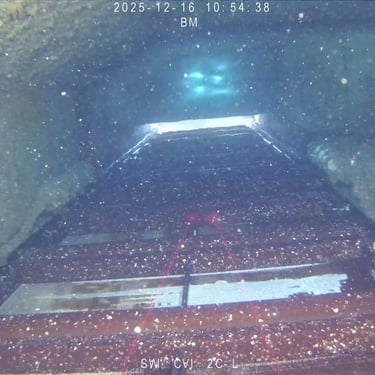
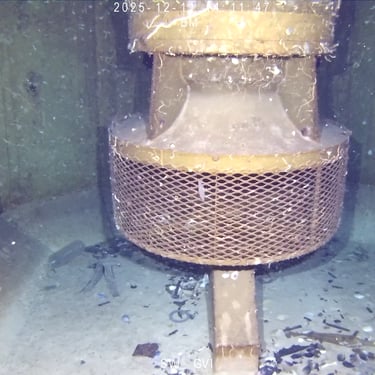
Ultra HD (4K) visual inspection for detailed condition assessment
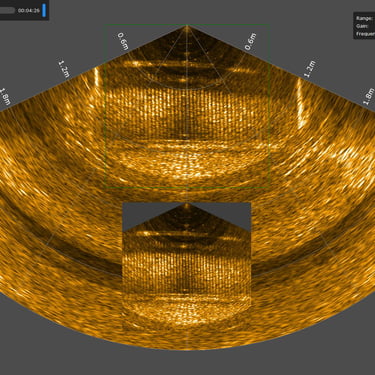
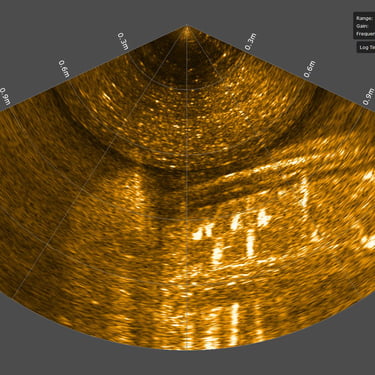
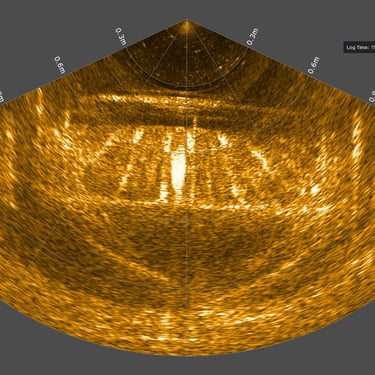
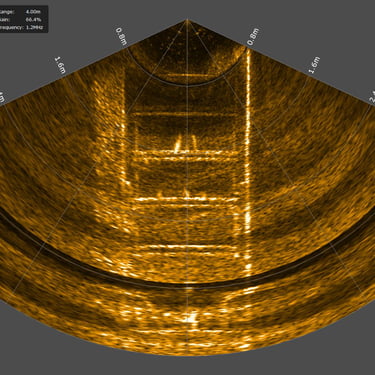
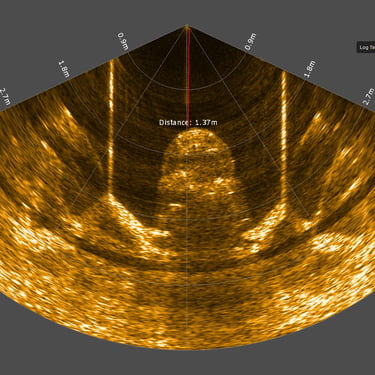
2D multibeam imaging sonar (Oculus M750D) for acoustic visualisation and measurement in low-visibility areas
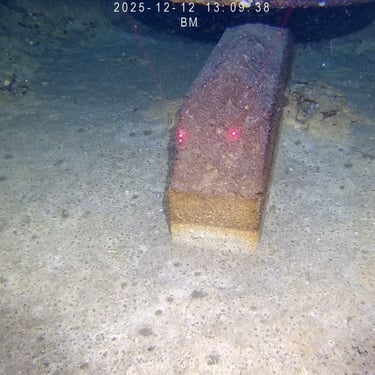
Laser scaling for dimensional reference and verification
High-accuracy navigation (DVL Water Linked A50) for positional consistency and repeatability
2-DOF manipulator for direct probing and sediment interaction
High-output LED lighting (8,000 lumen) optimised for confined spaces
Targeted photogrammetry and 3D modelling, enabling geometric verification, volume estimation, and detailed assessment of critical features not fully resolvable by visual inspection alone
This multi-sensor approach ensured that observations were quantifiable, defensible, and suitable for engineering decision-making, rather than purely descriptive.
Deliverables & Decision Value
The project delivered a comprehensive, engineering-grade inspection package, including:
Structured inspection records for all chambers
Annotated visual imagery and imaging sonar data
Dimensional measurements and condition mapping
Selected 3D photogrammetric models
Secure cloud-based delivery for efficient client access
The results established a robust baseline condition reference for:
Integrity monitoring and maintenance planning
Prioritisation of corrective actions
Future repeat inspections using a consistent, repeatable methodology

Watch key moments of the inspection, including 4K video, laser scaling, multibeam imaging sonar, and 3D photogrammetric processing of the intake chambers, filtration systems and suction pumps.
Address
131 Praxitelous Street, Piraeus 185 32
© Copyright 2024 BMConsulting All Rights Reserved